
FlipGap Logo

    FlipGap

    Menu
    Country / Region
    Display currency
    Theme
    All flip topics

    Sewing Machines

    A Bernina listed at estate-sale prices sells for ten times that to people who know the number.

    Sewing machines are one of the widest text-identifiable price gaps in flipping: quality mechanical machines (Bernina 930/1130, Pfaff, Juki, Singer Featherweight) trade for hundreds to over a thousand on the collector and quilter market, while estates and downsizers list them as "old sewing machine" for pocket change.

    Why it flips

    Model numbers decide everything — a Bernina 1130 and a no-name machine look identical to the seller.

    The buyers (quilters, sewists, collectors) know exactly what they want and pay stable, documented prices.

    Estate supply is constant

    these machines outlive their owners and get listed by heirs who never sewed.

    Swiss and German brands (Bernina, Pfaff) are household items in Europe — classifieds supply is deep.

    Start here

    • Learn the golden models first: Bernina 930/1130/1230, Singer Featherweight 221, Pfaff 1222 — then search for exactly those.

    • Test straight stitch, zigzag and reverse; listen for smooth running. Missing accessories cut real value.

    • The case, pedal, bobbins and presser feet matter — original accessories can double a Featherweight's price.

    • "Grandma's sewing machine, works" is the classic underpriced listing — ask for the model number in the first message.

    Pro moves

    • Metal-gear mechanical machines are the value tier; avoid plastic-gear 90s consumer machines entirely.

    • Correct threading, the right needle and bobbin, and maker-approved cleaning can turn "untested" into "sews a clean seam". Timing, seized mechanisms and motor faults are technician work — get a quote first.

    • Industrial Jukis have a separate, strong market — heavy, so local arbitrage works in your favor.

    • Overlockers/sergers from Babylock and Juki resell disproportionately well — owners rarely know the market.

    Live listings

    No live listings for this topic right now — try the ready-made searches below.

    Who this suits

    Work required · Working item
    Routine maintenance
    Work required · Repair candidate
    Basic · Under an hour
    Diagnostic uncertainty
    Medium
    Tools
    Household items
    Transport
    Fits in a car
    Storage
    A shelf
    Entry budget
    £50–£250
    Price guidance
    FlipGap price guide from observed listings

    Specific opportunities

    Each one is a product, a confirmed fault and a procedure. None of them is a claim that the fault is common, cheap or profitable.

    Sewing machine that skips or jams: threading, needle, bobbin, cleaning

    Skipped stitches and thread jams can come from wrong threading, a worn or wrong needle, the wrong bobbin type or lint under the needle plate. Correcting those is owner care. It suits beginners with the manual.

    Potentially straightforward if this fault is confirmed

    Work required
    Routine maintenance
    Skill
    Basic
    Diagnosis time
    Under an hour
    Repair time
    Under an hour
    Tools
    Household items

    Re-thread, fit the right needle and bobbin, clean · Low safety relevance

    Confirm the fault first

    • The handwheel turns freely through a full cycle.
    • With a new correct needle, the right bobbin and correct threading, it forms a stitch on scrap fabric.
    • Exact model known; manual found.
    • Motor runs and the pedal controls speed.

    Limits

    • Timing, seized mechanisms and motor faults need a different skill tier.
    • Cracked plastic gears on some older machines are not an owner job.

    Cheap part, easy job? Not the same thing

    Needles and bobbins are cheap, but bobbins are model-specific and “nearly right” ones cause the fault you are trying to fix. Oil only where and if the manual says — some machines must not be oiled by the owner.

    Checks after the work

    • Straight stitch, zigzag and reverse on two fabric weights.
    • Even tension top and bottom.
    • Bobbin winds properly.

    Tell the buyer

    • Cleaned and set up — not “serviced”, unless a technician did it.
    • Included feet, bobbins and accessories.
    • Functions not tested.

    Sources: BERNINA (WeAllSew): Machine Maintenance FAQ: Cleaning and Oiling
    Frequently asked

    Which machines are actually worth money?

    Bernina mechanicals (930, 1130, 1230), Singer Featherweight 221/222, Pfaff 1222, and Juki industrials. Most modern plastic consumer machines are worth little regardless of brand.

    How do I test a machine when buying?

    Bring fabric and thread. Test straight stitch, zigzag, reverse and buttonhole if present, and listen for grinding. A machine that runs smoothly but needs a service is a buy; one with broken cams or gears usually is not.

    Are these hard to ship?

    They are heavy (10–15 kg) but tough — double-box with the machine immobilized. The weight is why local prices sit below the global market, which is exactly the gap you are flipping.

    Free handbook

    Learn the system before you risk the money.

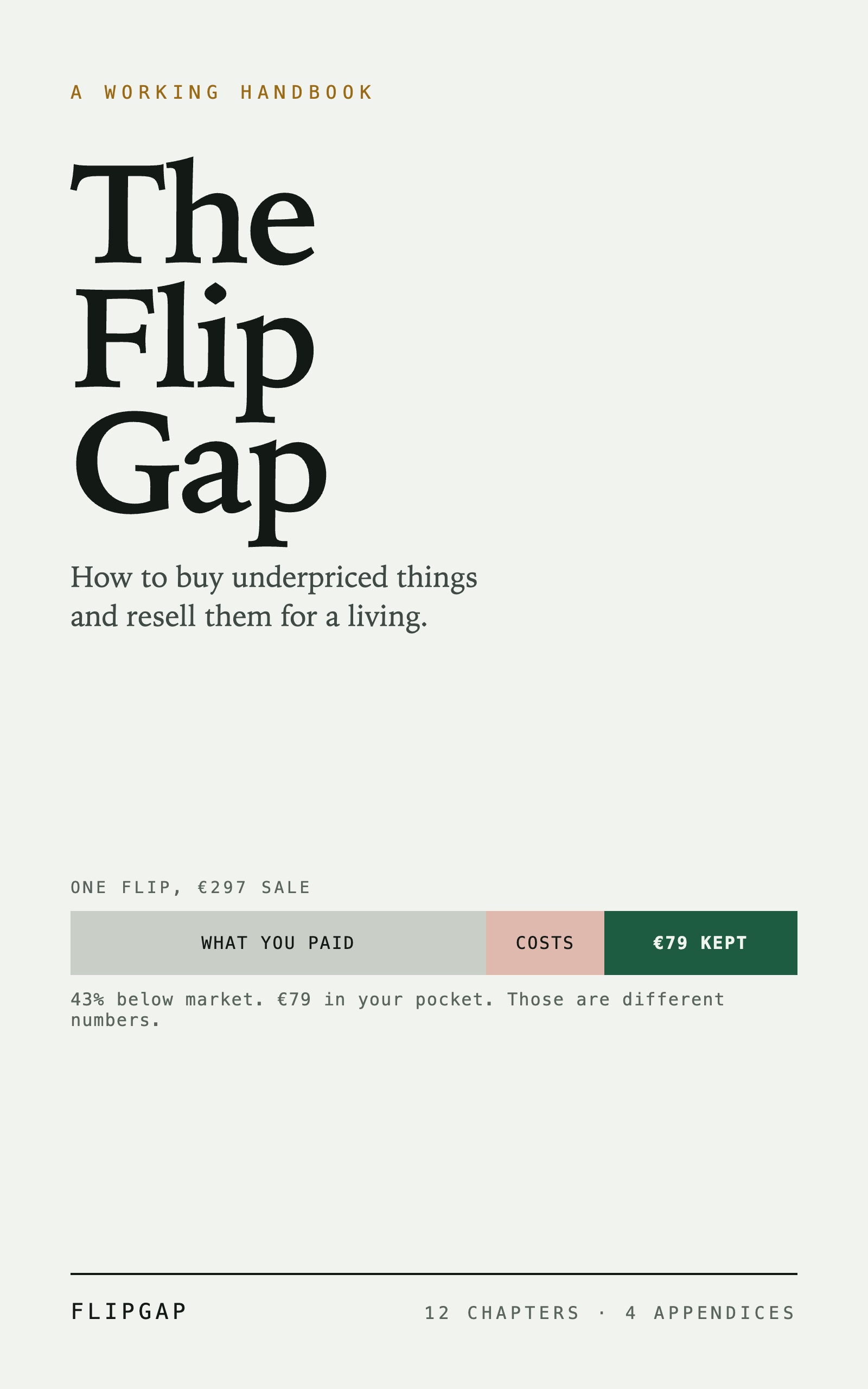
    The Flip Gap turns product flipping into a repeatable workflow: source, verify, calculate take-home profit, buy safely, list well, and learn from every sale.

    • Fee-aware deal maths
    • A 30-day operating plan
    • Checklists for every buy

    Education, not an earnings promise. Always verify a deal yourself.

    The Flip Gap handbook cover