Trading Cards
Pokémon, Magic, sports cards — the most liquid collectibles on earth.
Trading cards are the highest-velocity flip category: tiny to ship, huge price spreads between a seller who doesn't grade and a buyer who does. Most sellers on classifieds price whole binders by feel — that is where the margin lives.
Why it flips
Sellers routinely price collections by the binder, not the card — one chase card can pay for the lot.
Grading arbitrage
a raw near-mint card can be worth multiples once slabbed (PSA/BGS).
Postage-stamp logistics
shipping costs almost nothing, so cross-border spreads are pure margin.
Start here
Start with lots and binders, not singles — sellers underprice in bulk, buyers overpay for singles.
Learn set symbols and rarity marks before you buy anything; a phone loupe costs €10.
Check sold prices, not asking prices — active listings are wishes, sold listings are the market.
Condition is everything: whitening on edges or a scratch on the holo can halve the value.
Pro moves
Hunt misspellings ("pokemon" variants, "Glurak" vs "Charizard") — mislabeled listings get no views.
Estate and "inherited collection, no idea" listings are the best expected value in the category.
Grade selectively: only cards where the slabbed price is ≥3× raw plus fees are worth the wait.
Watch region gaps: Japanese singles often sell below EU/US market on local classifieds.
Live listings
No live listings for this topic right now — try the ready-made searches below.
Who this suits
- Work required · Working item
- None
- Work required · Repair candidate
- No repair guidance published
- Transport
- Ships by parcel
- Storage
- A shelf
- Entry budget
- under $50
- Price guidance
- FlipGap price guide from observed listings
Frequently asked
Which cards should I look for first?
Vintage sets (WOTC-era Pokémon, early Magic) and sealed product hold value best. In modern sets, only chase rares and alt-arts matter — bulk commons are effectively worthless.
Is grading worth it?
Only when the graded market price is at least 3× the raw price plus the grading fee, and the card is genuinely near-mint. Grading mediocre cards is the classic beginner money-loser.
How do I avoid fakes?
Buy binders and collections from private sellers with photos of real shelves, not stock images. Learn the light test and texture checks for your game — and treat too-cheap graded slabs as fakes until proven otherwise.
Learn the system before you risk the money.
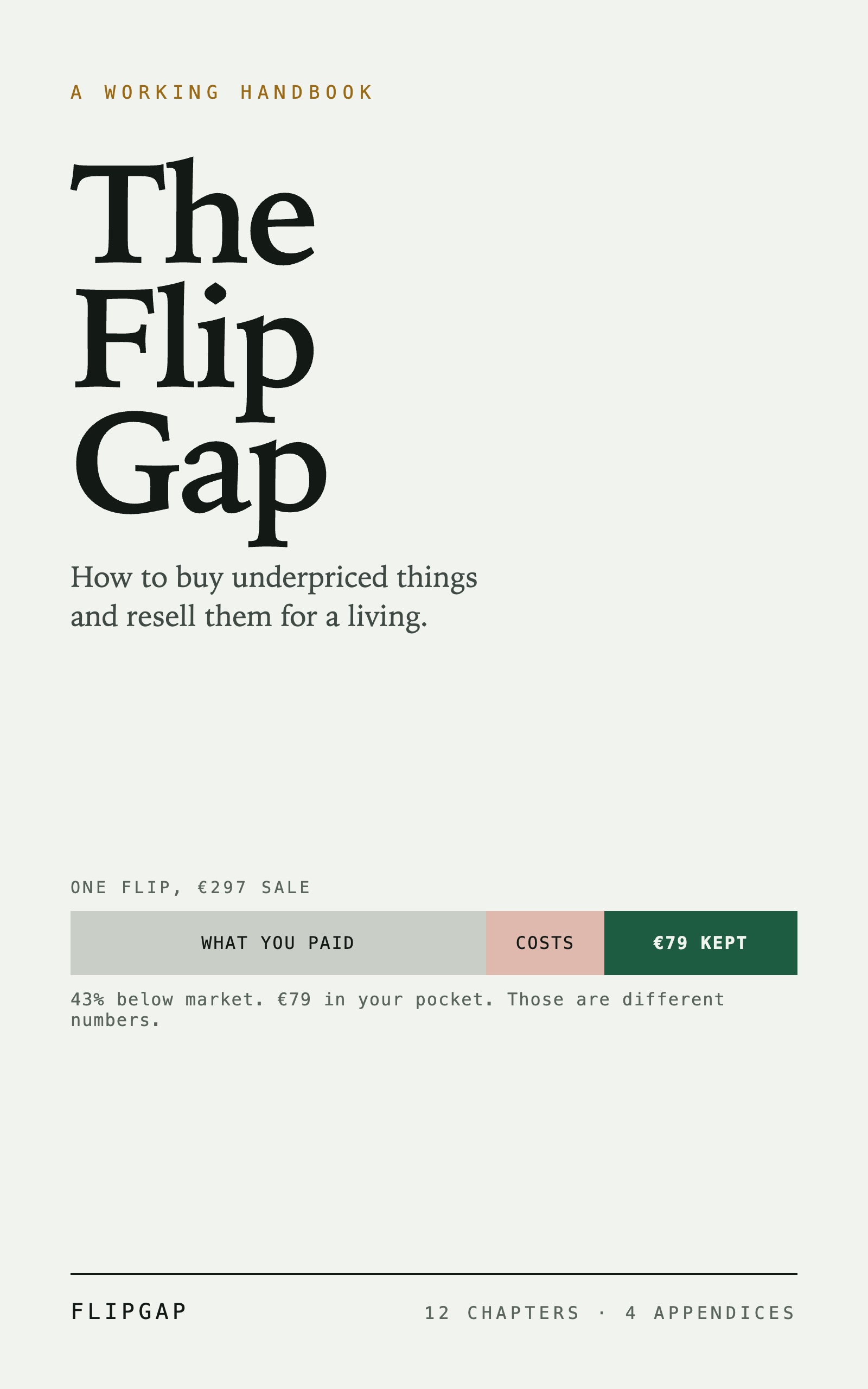
The Flip Gap turns product flipping into a repeatable workflow: source, verify, calculate take-home profit, buy safely, list well, and learn from every sale.
- Fee-aware deal maths
- A 30-day operating plan
- Checklists for every buy
Education, not an earnings promise. Always verify a deal yourself.